


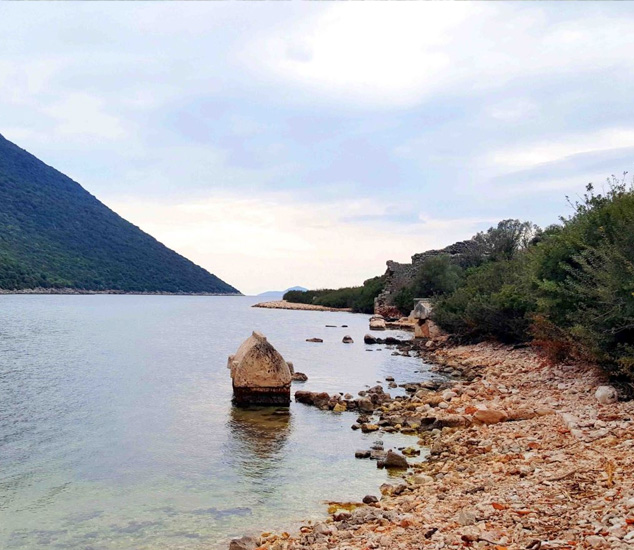
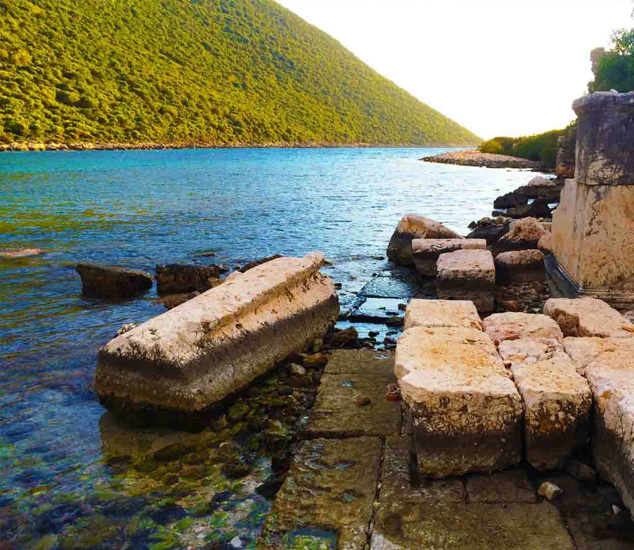

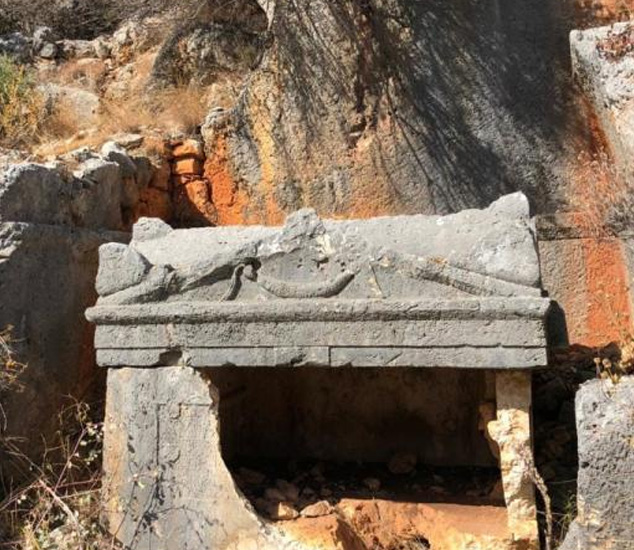

Aperlai is a small yet historically significant Lycian port city located at the beginning of the Sıçak Peninsula, positioned between present-day Kaş and Kekova, right along the edge of a long inlet. The Luwian-origin name “Aprillai” is believed to mean “water passage,” and Byzantine episcopal records refer to the city as “Aprillae.”
The history of Aperlai extends back at least to the 5th–4th centuries BC. Silver coins inscribed in the Lycian language and bearing the abbreviations “apr” and “prl” reveal that the city held a strong presence even before the Lycian League. Its name appears frequently in the works of late antique authors such as Pliny, the Stadiasmus, Ptolemy, and Hierocles. In Piri Reis’s Kitab-ı Bahriye, Aperlai is described as a quiet settlement inhabited by a few fishing families, noted for its sheltered harbor.
During the Lycian League period, Aperlai served as the center of a sympoliteia composed of either three or four cities, depending on the source. Acting together with Simena, Apollonia, and Isinda, Aperlai held the position of the leading city with “one unified vote” within the League. In the Roman Empire era, as with other Lycian cities, Aperlai held the right to mint coins only during the reign of Emperor Gordian III.
Most of the visible structures in Aperlai today date from the Roman period; however, earlier Hellenistic remains are also present. The ruins of the city lie along the northern slope of the bay, at the foot of a hill that descends toward the sea.
Aperlai was established along a rising line from the shoreline toward the acropolis, and its fortifications exhibit exceptionally sturdy masonry combining both rectilinear and polygonal stonework. The northern section of the walls, reinforced with towers, includes three square defense towers. The best-preserved portion, the western walls, contains three gates: two flat and one arched. The southern walls run parallel to the sloping hillside and are built from polygonal blocks. At the center of this section, the main entrance gate—flanked by two towers—has survived partially to the present day.
Throughout its history, Aperlai’s sheltered harbor, strategic location, and prominent role within the Lycian League have made it a site of rich cultural and archaeological heritage.