


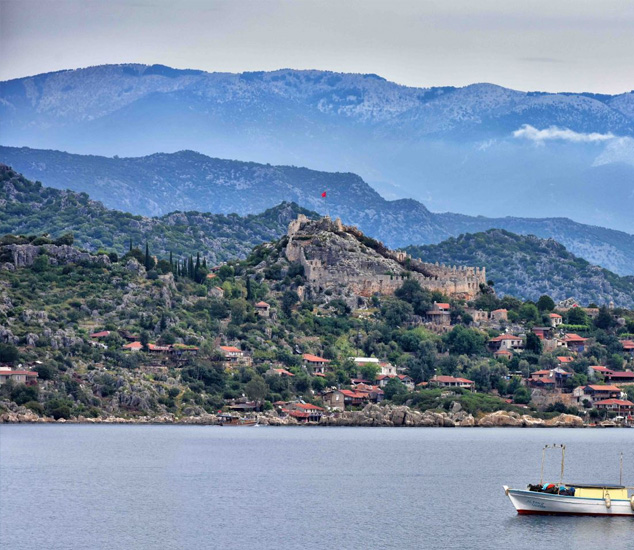

Ancient Simena—known today as Kaleköy—is a unique settlement located between Kaş and Demre in Antalya, directly facing Kekova Island. Built upon a small peninsula, this charming village is one of the rare places in Türkiye that can only be reached by sea.
The historical traces of Simena date back to the 4th century BC. Although the city’s name was recorded by Pliny in the 1st century AD, inscriptions written in the Lycian language and silver coins discovered in Aperlai reveal that Simena has a much earlier past. In the ancient Lycian League, Simena was jointly represented with Aperlai, and it is known that the city maintained its importance as an independent settlement after the region came under Roman rule.
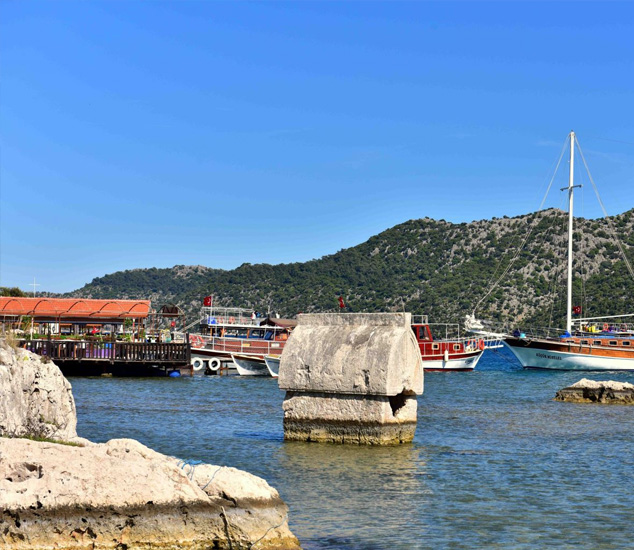
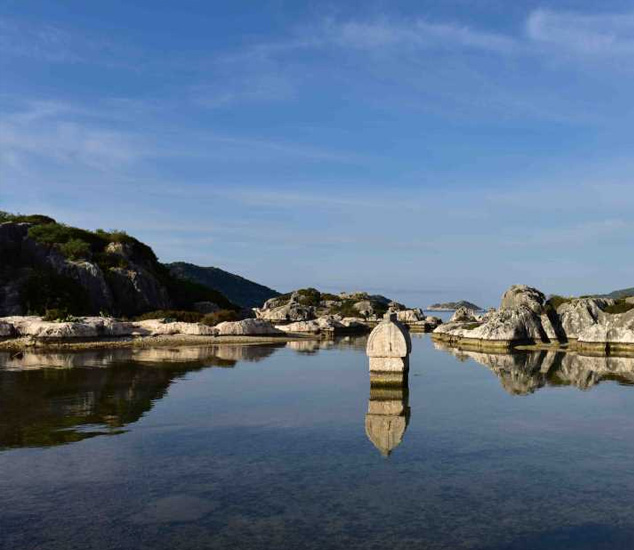
As you make your way toward the castle, the first structure you encounter is its impressive fortress, highlighting Simena’s strategic position. Actively used during the Middle Ages, the castle was built on a high vantage point that controlled the entire region. Several earthquakes throughout antiquity caused parts of Simena to sink beneath the water. For this reason, while walking along the shoreline, you can see steps descending into the sea, Lycian-style sarcophagi, breakwaters, and various submerged architectural remains.
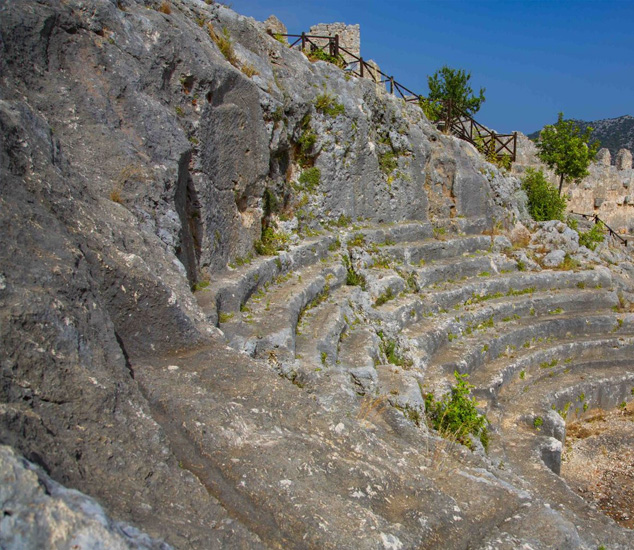
Upon reaching the summit of the castle, visitors are greeted by a small yet striking theatre carved directly into the rock. Comprising seven rows of seats, this unique structure—accommodating around three hundred people—is one of the smallest theatres in the Lycian region. Within the castle area, one also encounters water cisterns, rock-cut tombs, and traces of religious buildings that were repurposed over time. This sacred site, which originally served as an ancient temple, was transformed into a church during the Byzantine period and later into a mosque.
Stretching northeast of the castle lies a wide necropolis, one of Simena’s most remarkable features. The distinctive Lycian house-type tombs and, in particular, a sarcophagus adorned with a Lycian inscription vividly reveal the region’s cultural heritage.